A Musical Legend of Bharata
27th March, 1927
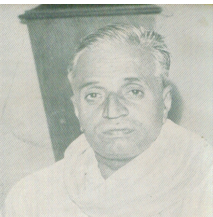
Born into a household resonant with the sacred sounds of Harikatha, H.R. Seetharam Sastry grew to become one of the most distinguished figures in Carnatic violin — carrying forward a rich musical legacy that spanned generations and touched the soul of Indian classical tradition.
Explore His LegacyScroll to journey
H.R. Seetharam Sastry was born on 27th March, 1927, into a family deeply immersed in the devotional arts of India. His father, Gamaki Ramakrishna Sastry, was a celebrated Harikatha Vidwan — a master narrator and musician who wove sacred stories through song and discourse. Growing up in such a spiritually and artistically charged environment, young Seetharam was naturally drawn to the world of music from his earliest years.
The sounds that filled his childhood home — ragas rendered with devotion, the rhythms of classical recitation, the philosophical underpinnings of the guru-shishya tradition — became the very foundation upon which his extraordinary musical life was built. His father's example as a Harikatha Vidwan instilled in him a reverence not just for technical mastery, but for the deeper spiritual purpose that lies at the heart of Indian classical music.
In the hallowed tradition of Indian classical music, the relationship between a student and teacher is considered nothing less than sacred. Seetharam Sastry's life was transformed when he came under the tutelage of the incomparable Shri Chowdiah — the titan of Carnatic violin, whose brilliance had already redefined the very possibilities of the instrument.
Chowdiah's lineage included luminaries such as R. K. Venkatarama Sastry and Prof. Mysore V. Ramarathnam, and Seetharam Sastry joined a distinguished circle of disciples that included Ramanujam, Madurai Venugopal, and Chinnappa. Under Chowdiah's rigorous and inspired guidance, he absorbed not just the technical vocabulary of Carnatic violin, but the spirit, nuance, and soulfulness that made his Guru's music unforgettable.
Throughout his life, Seetharam Sastry exemplified the ideal of an artist who sees music not as a profession but as a calling. His performances were marked by a deep internalization of the raga's essence, a sensitivity to the moment, and an unwavering fidelity to the classical tradition he had inherited. He was both a keeper of the flame and a generous contributor to the ongoing story of Carnatic music.
From the early whispers of a musician's destiny to the grand stages of Indian classical music
Born on March 27th into the household of Harikatha Vidwan Gamaki Ramakrishna Sastry. The young Seetharam grew up hearing the classical forms of Indian music daily — ragas sung in devotion, rhythms of discourse, and the sacred narratives of the Harikatha tradition. Music was not taught to him; it was breathed.
The defining chapter of Seetharam Sastry's musical life began when he became a disciple of the legendary Shri T. Chowdiah — one of the most towering figures in the history of Carnatic violin. Under Chowdiah's masterful guidance, he imbibed the rigorous techniques, emotional depth, and spiritual sensitivity that would mark all his future performances. The guru-shishya bond was complete and lifelong.
In 1975, Seetharam Sastry participated in the prestigious Radio Sangeet Sammelan — a landmark platform that brought together the finest classical musicians of India under the auspices of All India Radio. His participation in this gathering was a recognition of both his standing in the classical world and his mastery of the Carnatic violin tradition.
Perhaps his most celebrated contribution to Indian cultural life, Seetharam Sastry played a central role in the rebirth of the Hampi Festival in 1976. Set against the majestic ruins of the Vijayanagara Empire, this revival rekindled a tradition of classical arts in one of the most historically resonant settings in all of India — a fitting stage for a musician of his stature.
Over the arc of his career, Seetharam Sastry shared the stage and the spirit of music with legends from across the Indian classical spectrum. His association with Lalgudi G. Jayaraman at the Ramaseva Mandali stands as a memorable moment in Carnatic history. He performed alongside the incomparable vocalist M.L. Vasantha Kumari, and collaborated with violin maestro A. Kanyakumari.
In the finest tradition of musical dialogue, Seetharam Sastry also engaged with Hindustani masters who transcended boundaries. His interactions and performances with Ustad Amjad Ali Khan (Sarod), Pandit Hariprasad Chaurasia (Bansuri), and the legendary vocalist Pandit Bhimsen Joshi illustrated the universality of his artistry and his ability to converse musically across the two great streams of Indian classical music.
In 1976, Seetharam Sastry was instrumental in breathing new life into the Hampi Festival — a cultural celebration set within the UNESCO World Heritage ruins of the Vijayanagara Empire. This revival positioned Hampi as a premier venue for Indian classical arts, attracting musicians and audiences from across the nation and ensuring that ancient Kannada cultural heritage remained vibrantly alive.
His participation in the All India Radio's Sangeet Sammelan in 1975 brought Carnatic violin to the ears of millions across the subcontinent. These radio broadcasts were among the most significant platforms for classical music in pre-television India, and Seetharam Sastry's presence on them helped spread the reach of his Guru's violin tradition to every corner of the country.
As one of the key disciples of the legendary Shri Chowdiah, Seetharam Sastry bore the profound responsibility of keeping his Guru's musical philosophy alive. Through his own performances and his dedication to the classical tradition, he ensured that the unique bowing style, the raga elaborations, and the emotional depth characteristic of the Chowdiah tradition were faithfully transmitted to future generations.
His association with the Ramaseva Mandali — one of Bangalore's most revered cultural institutions — linked him to a century-long tradition of Carnatic music patronage and performance. Sharing the stage here with Lalgudi G. Jayaraman was a moment that crystallized the living continuity of the classical tradition he had devoted his life to serving.
By performing and collaborating with Hindustani masters like Ustad Amjad Ali Khan, Pandit Hariprasad Chaurasia, and Pandit Bhimsen Joshi, Seetharam Sastry helped forge bridges of understanding between the Carnatic and Hindustani traditions — demonstrating the underlying unity of all Indian classical music and its capacity for joyful, respectful dialogue.
At a time when the violin was still asserting its place as a principal solo instrument in Carnatic music, Seetharam Sastry's performances helped elevate its stature and reach. His mastery of tone, his sensitivity in accompanying vocalists, and his commanding solo presence all contributed to cementing the violin's irreplaceable role in the Carnatic classical canon.
Glimpses from a life lived in music
Photographs from the personal archives of H.R. Seetharam Sastry's family. Gallery placeholders await the addition of archival images.
Let the spirit of Carnatic violin transport you to another world
Experience the meditative depth of a classical violin recital in the Carnatic tradition — the very art form that H.R. Seetharam Sastry dedicated his life to.
Rare archival footage and recordings from Seetharam Sastry's celebrated performances across India, including his appearances at Ramaseva Mandali.
Explore the musical lineage of Shri Chowdiah, whose revolutionary approach to the Carnatic violin forever changed Indian classical music and shaped the artistry of his disciples.
Carnatic classical music is built upon ragas — melodic frameworks that evoke specific emotions, times of day, and seasons. A master like Seetharam Sastry could make a single raga a journey of hours.
"In the great tradition of Indian music, the guru gives not just knowledge, but their very soul. Seetharam Sastry received this gift from Shri Chowdiah, and spent a lifetime honoring it through every note he played."
— In memory of H.R. Seetharam Sastry
Through his unwavering dedication to the Chowdiah lineage, Seetharam Sastry ensured that one of the most distinctive voices in Carnatic music — that of the Mysore violin tradition — remained vibrant and alive. His performances were acts of custodianship as much as artistry.
Every great musician leaves behind not just recordings but a living influence. Those who heard Seetharam Sastry play — the young musicians who sat at his feet, the audiences who witnessed his concerts — carry within them a spark of his musical vision. His legacy is measured in the generations he has inspired.
His role in the revival of the Hampi Festival stands as a monument to his belief that classical arts must be celebrated in settings worthy of their grandeur. By bringing music back to the ancient stones of Vijayanagara, he connected the present to a glorious past, reminding India of its incomparable cultural heritage.
Born into a family of Harikatha, Seetharam Sastry understood from childhood that music in India is never merely entertainment — it is a form of worship, a path to the divine. His performances were suffused with this quality of devotion, giving them a transcendence that audiences felt long after the last note had faded.